
Board & Train in Grand Rapids, MI
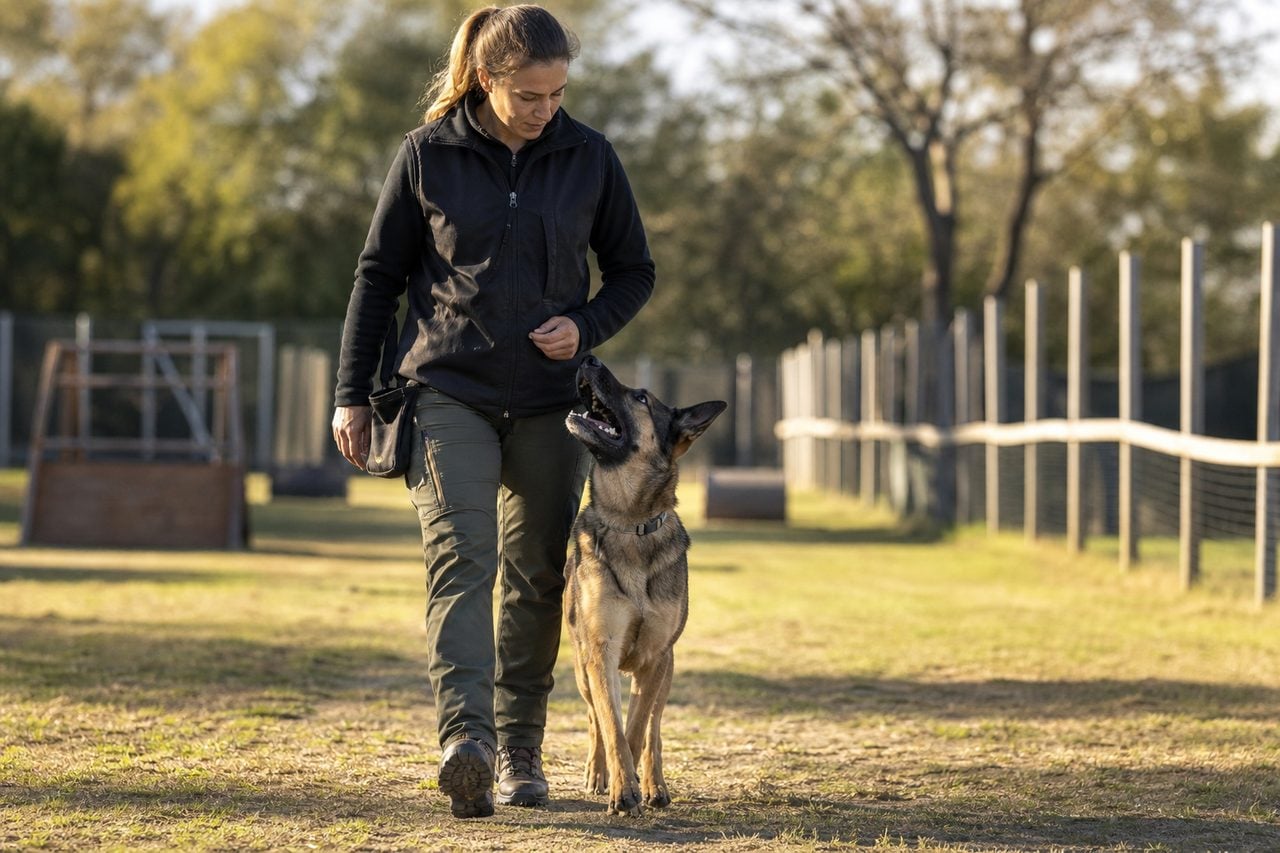
Board-and-train programs — where your dog stays with a trainer for a set period of intensive, professional training — appeal to busy owners who want faster results or help with tougher behavior problems. Instead of squeezing training into a hectic schedule, you hand the daily work to a professional for a couple of weeks or more, then take home a dog with a foundation of skills already in place. For the right dog and the right owner, it can be a powerful option.
But board-and-train is also the training format with the widest quality range and the highest cost, so it deserves careful thought before you commit. Grand Rapids owners across Kent and Ottawa counties — from Wyoming and Kentwood to Rockford and Ada — have access to a deep local training community, which means you can afford to be selective and find a program that matches your values. This guide explains how board-and-train works, who it suits, how to vet a program, and what to expect when your dog comes home.
What Board-And-Train Actually Involves
In a board-and-train program, your dog lives with a trainer — either at a dedicated facility or in the trainer’s home — for a defined period, commonly ranging from a couple of weeks to a month or more, while receiving daily, structured training. The premise is efficiency and consistency: a professional works with your dog multiple times a day, every day, applying consistent rules and timing that are hard for a busy household to match. The dog can make rapid progress because the training is concentrated and expertly delivered.
Programs vary widely in focus. Some emphasize basic obedience and manners — leash walking, recall, place, settling — while others specialize in specific problems like leash reactivity, jumping, or door manners. Some run themed programs such as puppy foundations or off-leash reliability. The daily routine typically blends training sessions with rest, play, and enrichment, since a dog cannot learn effectively without adequate downtime and mental variety.
The most important thing to understand is that a good board-and-train does not end when your dog comes home. Because behavior is tied to environment and to who is handling the dog, the skills your dog learns with the trainer must be transferred to you and your household. That is why quality programs build in owner instruction — go-home sessions, video updates, written guidance, and often follow-up lessons — to teach you how to maintain and reinforce what your dog learned. Without that transfer, gains fade. Think of board-and-train as jump-starting the training and handing you a trained dog plus the instructions to keep it that way, not as a drop-off service that returns a permanently finished pet.
Who Board-And-Train Is Right For
Board-and-train is not the best fit for every dog or every situation, and being honest about whether it suits yours will save you money and disappointment. It tends to work best in specific circumstances, and understanding them helps you decide whether to pursue it or choose group classes or private lessons instead.
It can be a strong option for owners who genuinely lack the time to do the intensive early legwork themselves, or who feel out of their depth with a particular problem. A busy professional, a family in a chaotic season of life, or someone struggling with a behavior they cannot make headway on may benefit from handing the concentrated work to a pro. It also suits dogs that need consistent, frequent repetition to break an entrenched habit, since a professional can deliver that consistency in a way a distracted household often cannot.
That said, board-and-train has real limitations to weigh. Because so much of a dog’s behavior is context-dependent, results only last if you follow through at home, so it is a poor choice for an owner unwilling to do the ongoing maintenance work. It is also a significant expense, sitting in the highest price tier of training options. And for fearful or anxious dogs, being separated from their family and placed in an unfamiliar environment can be stressful and occasionally counterproductive, depending on the program and the dog. Many trainers argue that for typical obedience and manners, owner-involved group classes or private lessons build a stronger, more durable owner-dog relationship precisely because you learn the skills alongside your dog. Board-and-train is a tool, not a shortcut around the ongoing responsibility of living with and reinforcing a well-behaved dog.
Vetting A Board-And-Train Program
Because your dog will be living out of your sight in someone else’s care, vetting a board-and-train program thoroughly is even more important than choosing a regular class. The training field is unregulated, quality varies dramatically, and you are entrusting both your dog’s behavior and its welfare to strangers for weeks. Take your time and ask hard questions.
Start with methods, and be firm about it. Ask exactly how the trainer teaches behaviors and, crucially, how they handle unwanted behavior and dogs that resist. Favor programs built on reward-based, positive reinforcement methods, and be very cautious of any that rely on harsh corrections, pain, or intimidation — you will not be there to see how your dog is treated, so the trainer’s philosophy is your only safeguard. A trustworthy trainer will describe their approach openly and welcome the questions rather than getting defensive.
Then scrutinize the care and transparency. Ask to tour the facility or home where your dog will stay, and look at where dogs sleep, exercise, and spend their downtime — it should be clean, safe, and humane. Ask how many dogs are handled at once, what the daily schedule looks like, and how much rest and enrichment dogs get. Insist on communication during the stay: regular photo or video updates let you see real progress and reassure you your dog is doing well. Confirm what happens after your dog comes home — how many go-home or follow-up sessions are included, and whether there is ongoing support if problems resurface. Ask for references from past clients and read reviews carefully. If a program is vague about methods, reluctant to let you see where your dog will live, or promises guaranteed results, treat that as a serious warning sign and keep looking. Grand Rapids has enough options that you never need to settle.
Costs And What Affects Them
Board-and-train is typically the most expensive training format, and understanding why helps you evaluate whether a given program’s price is reasonable. Rather than quoting specific numbers, it is more useful to understand the factors that drive cost so you can compare programs on value rather than sticker price alone.
The biggest cost driver is simply the intensity and duration of the service. You are paying not only for training expertise but for room, board, feeding, daily care, and the trainer’s hands-on time multiple times a day for the full length of the stay. A longer program naturally costs more than a shorter one, and a program addressing a complex behavior problem generally costs more than a basic manners package because it demands more skill and time. Programs at dedicated facilities with more staff and amenities may price differently than in-home trainers who take a small number of dogs.
What is included also affects the true cost and value. A program that bundles multiple go-home lessons, follow-up sessions, written plans, and ongoing support offers more than a cheaper one that returns your dog with no transfer of skills — and the cheaper option may actually cost more in the long run if the gains fade and you need additional help. When comparing programs, ask what exactly is included, how owner instruction is handled, and what support you get after the stay. Weigh the total investment against realistic outcomes and against the alternatives: for many everyday obedience goals, a series of group classes or private lessons in the Grand Rapids area accomplishes the goal at a fraction of the cost while building your own handling skills. Reserve the board-and-train investment for situations where its speed and intensity genuinely justify the premium.
The Critical Transition Home
The most underestimated part of any board-and-train program is what happens after your dog returns home. This transition period makes or breaks the entire investment. A dog can come back performing beautifully for the trainer and quickly regress if the household does not understand how to maintain the new behaviors. Planning for the transition is not optional — it is where the results actually live.
Understand that dogs behave differently in different environments and with different handlers. Your dog learned its new skills with a professional who has precise timing, clear rules, and consistent expectations. When it comes home to a familiar environment full of old associations and to handlers still learning the techniques, some slippage is normal at first. This is exactly why the go-home instruction matters so much: you need to learn the cues, the rewards, the timing, and the rules the trainer used so you can carry them forward seamlessly. Treat those go-home sessions as essential, not optional extras.
In the first weeks home, be consistent and patient. Use the same cues and rules the trainer established, keep up short daily practice, and enforce the structure across everyone in the household so your dog is not getting mixed signals. Gradually reintroduce the situations that used to be problems, at a manageable level, rather than throwing your dog straight back into the deep end. Practice the new skills in the real Grand Rapids settings where you will actually use them — on your street, at Provin Trails Park, on a walk along the Grand River — so the behavior generalizes to daily life. Stay in touch with your trainer and use any included follow-up support if something starts to slip. With consistent maintenance, the intensive work pays off for years. Without it, even the best program’s results erode. The trainer builds the foundation; you keep the house standing.
Alternatives Worth Considering First
Before committing to the significant expense and separation of a board-and-train, it is worth honestly considering whether another approach might serve you better. Board-and-train is one tool among several, and for many Grand Rapids owners a different format achieves the same goals with a stronger, more durable result and a smaller price tag. Weighing the alternatives is not a knock on board-and-train — it is how you make sure you are choosing it for the right reasons.
Group obedience classes are the most cost-effective path for typical manners and obedience, and they build something board-and-train cannot: your own handling skills, developed alongside your dog. Because you are present for every lesson, the learning transfers to real life more naturally, and the weekly rhythm keeps you accountable. For most everyday goals — a dog that walks politely, comes when called, and settles at home — a series of good group classes gets you there while deepening your bond.
Private lessons are the middle path, offering customized, one-on-one coaching at your pace without the separation and higher cost of board-and-train. A trainer working with you and your dog in your own home can address specific problems directly, coach you through real scenarios like the doorbell or the leash walk, and adjust as you go. Day-training, where a trainer works with your dog during the day and then hands the skills off to you, is another option that keeps your dog at home overnight. Given the depth of the Grand Rapids training scene, you can find quality providers for any of these formats close to home in Kentwood, Grandville, Byron Center, or wherever you are. Match the format to your actual situation: if you truly lack time or face a problem beyond your skill, board-and-train may be worth the premium — but for many owners, a more involved, lower-cost path produces a better-behaved dog and a stronger relationship over the long run.
Reviewed Board & Train Trainers in Grand Rapids
These reviewed Grand Rapids-area trainers from our directory handle board & train. Each links to a full profile with specialties, certified credentials, reviews, and contact info:
- Kingseed Kennels & Dog Training — 5.0★ (140 reviews)
- Red Sky Dog Training, LLC — 5.0★ (22 reviews)
- Ganderwood LLC — 5.0★ (1 review)
- West Michigan K9 — 4.9★ (337 reviews)
- Pine Hill Kennel & Dog Training — 4.9★ (51 reviews)
- Kona’s K9 Retreat — 4.9★ (38 reviews)
- House of Paws Dog Training — 4.6★ (9 reviews)
See all Grand Rapids board & train trainers →
Frequently Asked Questions
How long do board-and-train programs usually last?
Programs commonly run from a couple of weeks to a month or more, depending on the goals and the dog. Basic manners packages tend to be shorter, while addressing complex behavior problems takes longer. Remember that the stay is only part of the process — the go-home instruction and your ongoing maintenance at home are what make the results last.
Will my dog stay trained after a board-and-train?
Only if you follow through at home. Dogs behave differently with different handlers and in different environments, so some slippage after returning home is normal. Results last when you learn the trainer’s cues and techniques through go-home sessions and keep up consistent daily practice. A program with strong owner instruction and follow-up support is essential for lasting results.
Is board-and-train worth the higher cost?
It depends on your situation. For owners who genuinely lack time or face a problem beyond their skill, the speed and intensity can justify the premium. But for typical obedience and manners, group classes or private lessons often produce a stronger, more durable result at a fraction of the cost while building your own handling skills. Weigh it honestly against the alternatives.
How do I vet a board-and-train program safely?
Because your dog is out of your sight, vet thoroughly. Ask exactly how the trainer teaches and handles unwanted behavior, favoring reward-based methods. Tour where your dog will stay, ask about daily schedule and rest, and insist on regular photo or video updates during the stay. Confirm what go-home and follow-up support is included, and ask for references. Vagueness or guarantees are warning signs.
Is board-and-train a good idea for a fearful or anxious dog?
Often not. Separation from family and placement in an unfamiliar environment can be stressful and sometimes counterproductive for fearful or anxious dogs, depending on the program. These dogs frequently do better with owner-involved private lessons that build confidence gradually while keeping them in familiar surroundings. Discuss your dog’s temperament honestly with any trainer before deciding.
What are the main alternatives to board-and-train?
The main alternatives are group obedience classes, private lessons, and day-training. Group classes are the most cost-effective for typical manners and build your own handling skills. Private lessons offer customized coaching without the separation. Day-training has a trainer work with your dog during the day while it stays home overnight. Given the depth of the Grand Rapids training scene, quality options exist for each.
Related: read our complete board & train guide or the full Grand Rapids dog training overview.
Ready to find the right board & train pro in Grand Rapids?